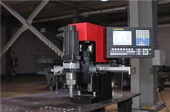
In the wood processing industry,energy efficiency is a critical factor that affects both operational costs and environmental sustainability.As businesses seek to optimize their production lines,the multi-functional wood crusher has emerged as a popular choice.But how does it compare to other wood processing machines in terms of energy consumption?Let's take a closer look.
Understanding the Multi-functional Wood Crusher
A multi-functional wood crusher is designed to handle multiple tasks-such as crushing,chipping,grinding,and sometimes even drying or screening-in a single machine.This integration eliminates the need for several separate devices,which can significantly reduce energy losses associated with material transfer between different stages of processing.
Energy Efficiency Advantages
1.Reduced Power Consumption per Unit Output
Traditional wood processing often involves a series of dedicated machines:a chipper,a hammer mill,a grinder,and possibly a separator.Each machine consumes power independently,and energy is wasted during material handling between them.A multi-functional crusher consolidates these steps,reducing the total energy required to process the same amount of wood.
2.Lower Idle and Standby Energy Losses
With fewer machines running simultaneously or sequentially,idle time and standby power consumption are minimized.In conventional setups,each machine may need to run even when not fully loaded,leading to unnecessary energy use.A multi-functional unit operates more continuously and efficiently under variable loads.
3.Optimized Motor and Drive Systems
Modern multi-functional wood crushers are often equipped with advanced motor control systems,such as variable frequency drives(VFDs).These allow the machine to adjust its power usage based on real-time load requirements,rather than running at full capacity all the time.This adaptive energy management is less common in older or single-purpose machines.
4.Fewer Conveyors and Auxiliary Equipment
Separate processing machines typically require conveyors,elevators,and other material handling equipment,each consuming additional electricity.By integrating functions,a multi-functional crusher reduces or eliminates the need for these auxiliary systems,further lowering overall energy consumption.
Comparison with Specific Machine Types
When comparing a multi-functional wood crusher with individual machines like disc chippers,hammer mills,and wood grinders,the energy advantage becomes evident.For example,a disc chipper typically consumes a moderate amount of energy per ton of wood processed,but it only performs the chipping function.A hammer mill or wood grinder requires additional energy to further reduce particle size.When these machines are used in sequence,the cumulative energy consumption is often higher than that of a single multi-functional unit performing all tasks in one pass.
Similarly,a single-function crusher usually processes wood in a stepwise manner,requiring multiple passes or transfers between machines.Each transfer wastes energy and time.In contrast,a multi-functional crusher handles the entire process in a continuous flow,resulting in better energy utilization.
Of course,actual energy performance varies depending on factors such as wood type,moisture content,target particle size,and machine quality.However,in most real-world applications,the multi-functional design delivers measurable energy savings.
Potential Drawbacks
While multi-functional wood crushers offer clear energy benefits,there are some considerations:
•Higher Initial Investment:The upfront cost of a high-quality multi-functional machine can be greater than purchasing individual low-cost units.
•Complex Maintenance:Integrated systems may require more specialized maintenance knowledge.
•Single Point of Failure:If the multi-functional crusher breaks down,the entire processing line stops,whereas separate machines offer redundancy.
However,from an energy perspective,these drawbacks are generally outweighed by long-term savings.
Yes,a multi-functional wood crusher is generally more energy-efficient compared to traditional,separate wood processing machines.By combining multiple operations into one streamlined process,it reduces total power consumption,minimizes energy waste from material handling,and allows for smarter load management.For businesses aiming to lower operating costs and reduce their carbon footprint,investing in a modern multi-functional wood crusher is a sound decision.
That said,the specific energy performance depends on the machine's design,the type of wood being processed,and the desired output specifications.It is always recommended to evaluate your unique processing needs and consult with manufacturers to select the most efficient solution for your operation.
Is A Multi-functional Wood Crusher Energy-Efficient Compared To Other Wood Processing Machines?
Aug 15, 2026
Leave a message
You Might Also Like